
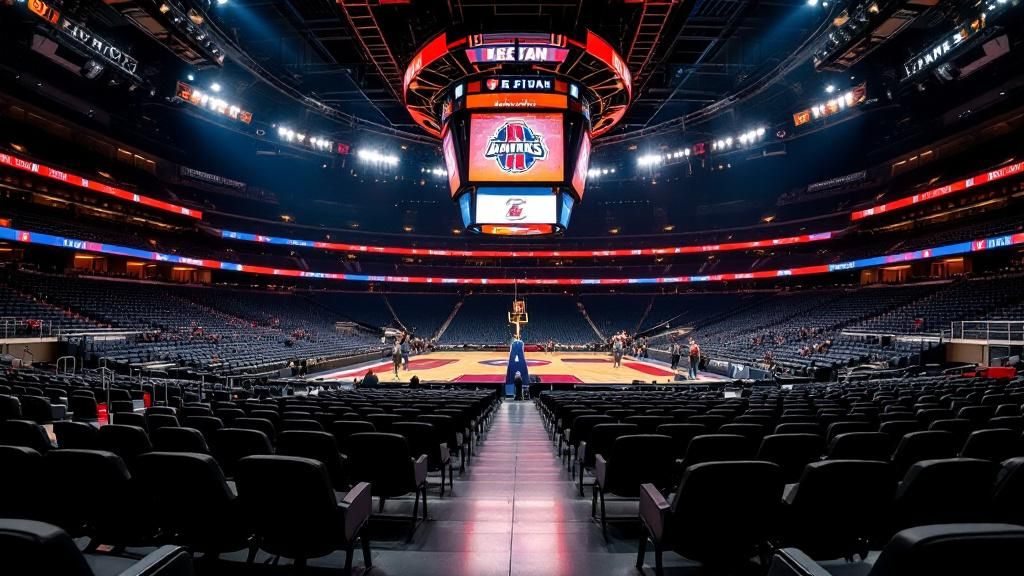
Tom Dundon, the owner of NHL side Carolina Hurricanes, has completed his purchase of the Portland Trail Blazers in a historic deal that marks the end of an era for the storied NBA side. The deal, valued at around $4.25 billion (£3.21 billion), sees Dundon take the helm as the team’s owner, with the Trail Blazers remaining based in Portland. The sale concludes a period of stewardship by the estate of Paul Allen, the Microsoft co-founder who purchased the team in 1988 and passed away in 2018. All revenue from the sale will support Allen’s charitable endeavours, representing a significant transition for one of basketball’s most storied organisations.
The Sale and Its Importance
The completion of this deal represents a turning point for the Portland Trail Blazers, concluding nearly four decades of control by the Allen family. Paul Allen’s acquisition of the franchise from original owner Larry Weinberg for $70 million in 1988 had positioned the billionaire as a custodian of one of basketball’s most cherished institutions. His death in 2018 required a period of stewardship by his estate, which ultimately concluded that a disposal would best serve both the team’s prospects and Allen’s charitable commitments. The choice to put the team on the market last May opened the door for fresh owners to take the reins.
Dundon’s commitment to the Portland fanbase signals an determination to reverse the franchise’s recent struggles and restore competitive excellence. The multi-billionaire, who has demonstrated investment acumen through his stewardship of the Carolina Hurricanes, takes over a team navigating significant challenges both on and off the court. His pledge to be “relentless towards constructing a team that can perform at the top tier, every single season” represents a bold statement of intent. With the Trail Blazers presently set for the play-in tournament under interim coach Tiago Splitter, the new ownership era arrives at a pivotal juncture for the organisation.
- Allen acquired the Trail Blazers for $70 million in 1988
- The franchise’s only NBA championship was secured in 1977
- Dundon also owns the NHL’s Carolina Hurricanes franchise
- All revenue from the sale support Paul Allen’s philanthropic efforts
From Allen’s Enduring Impact to Emerging Leadership
Paul Allen’s stewardship of the Portland Trail Blazers spanned nearly 40 years, during which the Microsoft co-creator was closely linked to the franchise’s identity and stability. His purchase of the team from founder Larry Weinberg in 1988 for $70 million represented the commencement of a transformative era, establishing Allen as a forward-thinking proprietor dedicated to building a competitive team. Throughout his ownership, Allen committed significant resources in the organisation, though title wins remained elusive after the franchise’s only championship in 1977. His death in 2018 resulted in considerable loss, with the estate later overseeing the team until the decision to seek new ownership emerged as the most sensible way ahead.
The move to Dundon’s ownership reflects a extension of the Trail Blazers’ pursuit of excellence whilst introducing fresh perspectives and resources. Dundon’s proven experience in sports ownership, notably his management of the Carolina Hurricanes in the National Hockey League, showcases his capacity to handle complex organisational challenges and deliver competitive improvement. The fresh leadership’s assurance that sale proceeds will support Allen’s charitable initiatives ensures that the enduring impact of the Microsoft pioneer extends beyond basketball into substantive charitable work. This alignment of ownership transfer with philanthropic goals embodies the values that characterised Allen’s tenure.
A Storied Franchise Background
The Portland Trail Blazers stand as the National Basketball Association’s most storied franchises, possessing a championship pedigree that extends back to 1977 when the team captured its sole NBA title. That championship season established Portland as a centre of basketball excellence and built a foundation of sporting pride that has endured across generations of supporters. The franchise’s initial success, coupled with its focus on developing homegrown talent, garnered the Trail Blazers a loyal supporter base celebrated across the league for their passionate support and commitment to the team.
Despite the championship success of the 1970s era, the Trail Blazers have faced significant difficulty in recapturing that level of sustained success in the years that followed. The current season demonstrates the challenges confronting the organisation, with the team navigating both competitive struggles and significant off-court complications. Head coach Chauncey Billups’s prolonged ban resulting from an FBI investigation into illegal sports betting and purportedly fixed, organised crime-connected card games has created considerable disruption. Under interim coach Tiago Splitter’s guidance, however, the Trail Blazers remain positioned to compete in the post-season play-in tournament, providing encouragement for a fresh beginning under new ownership.
Managing Existing Obstacles
The Portland Trail Blazers navigate this significant ownership transition amid substantial organisational turbulence that stretches well beyond standard competitive struggles. The franchise faces a series of complications that have tested the resilience of both the playing squad and the supporter base. Head coach Chauncey Billups’s suspension without timeline resulting from an FBI investigation into unlawful wagering and allegedly rigged, mafia-linked poker games has created extraordinary upheaval at the highest levels of the coaching staff. These complications have required the organisation to function under interim leadership whilst simultaneously attempting to sustain competitive levels and maintain team morale within the locker room during an already challenging season.
Despite these significant challenges, the Trail Blazers have successfully preserved competitive parity, with the team currently in position for the end-of-season play-in. This accomplishment speaks to the professionalism and determination of acting coach Tiago Splitter and the players who have managed an remarkably demanding set of circumstances. The change in ownership structure under Tom Dundon offers an platform to resolve systemic issues and create a revitalised institutional framework. Dundon’s commitment to building a successful team offers hope that the franchise can progress from previous controversies and concentrate efforts on playing excellence and organisational integrity.
| Season Metric | Current Status |
|---|---|
| Win-Loss Record | 38 wins, 38 losses |
| Head Coach Status | Chauncey Billups suspended indefinitely |
| Post-Season Qualification | Play-in tournament berth secured |
Uncertainty in Coaching and On-Court Performance
The absence of permanent head coaching direction has generated considerable doubt regarding the franchise’s long-term vision and long-term development plans. Interim coach Tiago Splitter has managed the squad’s operations with professional conduct during an exceptionally challenging timeframe, upholding competitive standards despite the considerable distraction of ongoing investigations and institutional upheaval. The play-in competition berth represents a creditable achievement under such difficult conditions, showing that the roster has maintained concentration and dedication despite the absence of permanent coaching. However, the lack of consistent leadership at the coaching level raises legitimate questions about the team’s capacity to execute complex tactical strategies and nurture emerging talent effectively.
The present record of 38 victories and defeats reflects a team undergoing transformation, showing neither the superiority needed to obtain a elevated postseason positioning nor the poor form that would suggest total structural breakdown. This equilibrium masks deeper concerns about squad assembly, player development, and the long-term performance direction. The appointment of permanent coaching staff will be amongst Tom Dundon’s most important early decisions, requiring the identification of an person capable of navigating the unique challenges facing the Portland organisation whilst creating the strategic structure essential for ongoing performance enhancement and championship aspirations.
Dundon’s Strategic Direction and Dedication Ahead
Tom Dundon’s takeover of the Portland Trail Blazers signals a pivotal moment for a team aiming to reclaim its competitive standing following a turbulent period marked by coaching scandals and institutional uncertainty. The Carolina Hurricanes owner has outlined an unambiguous commitment to building a championship-calibre team, committing that his ownership group will chase excellence with determination season after season. Dundon’s statement highlights continuity with Portland’s rich basketball tradition whilst signalling a new beginning under new stewardship. His track record with the NHL franchise illustrates an capacity to handle intricate sports business matters and execute strategic institutional reforms, qualities that will be invaluable as the Trail Blazers manage their rebuilding phase and strive to restore standing with their loyal supporter base.
The fresh ownership arrangement provides an opening to set up clearer governance frameworks and introduce extensive improvements addressing the structural weaknesses that resulted in the existing challenges. Dundon’s commitment to building a competitive team underscores the significant capital embodied in the estimated £3.21 billion deal value, signalling serious intent to reshape the franchise into a legitimate playoff contender. The commitment to keeping the organisation’s Portland home represents a key reassurance to fans and local stakeholders who worried about potential relocation. With the play-in competition on the horizon and permanent coaching roles forthcoming, Dundon encounters an pressing opportunity to prove his organisational capability and basketball knowledge over the crucial early period of his leadership.
- Establish long-term senior coaching team equipped to implementing consistent tactical excellence
- Develop comprehensive talent development initiatives focused on younger roster members
- Rebuild organisational credibility and organisational standards in the wake of past disputes
